
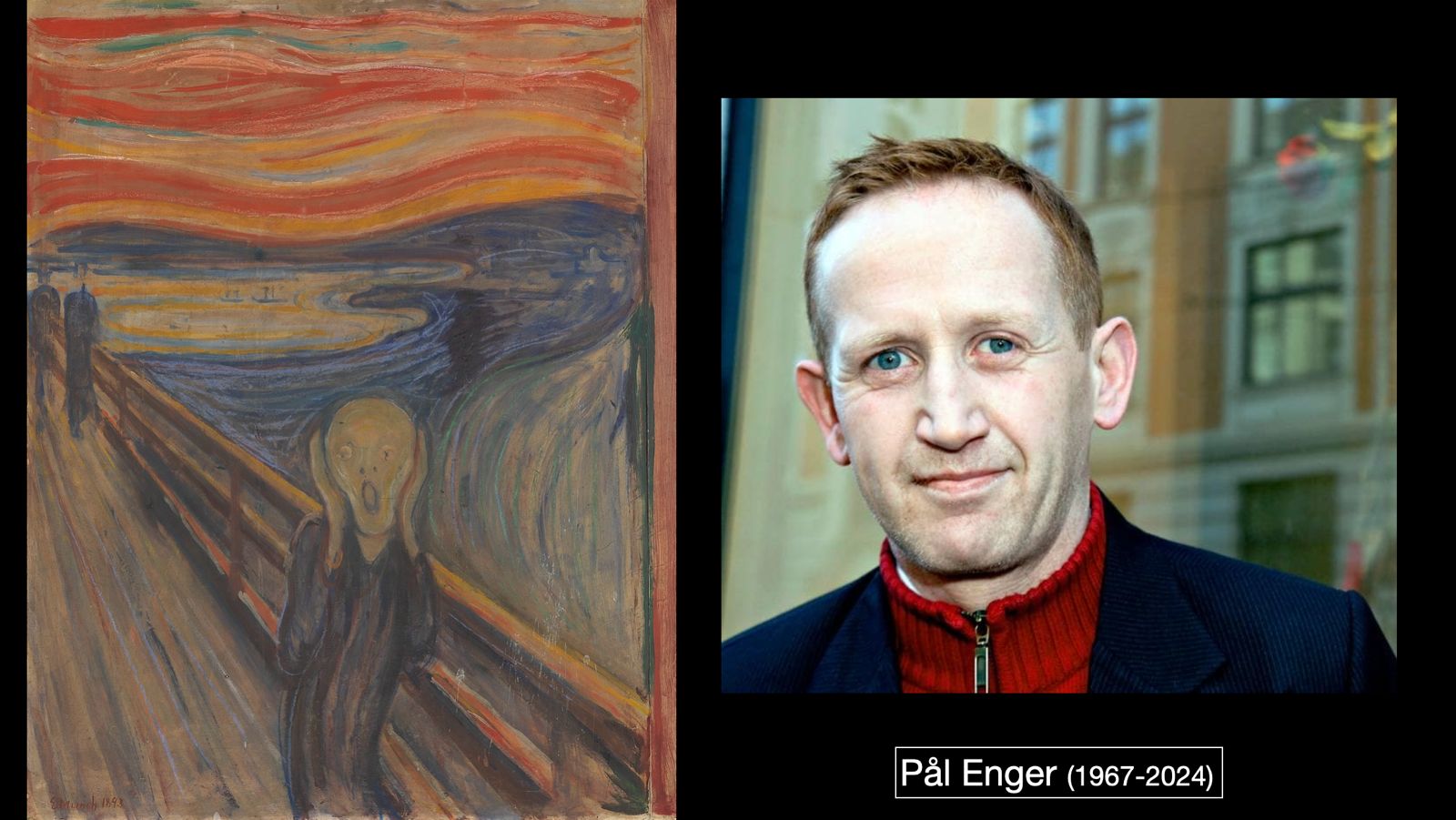
ON THIS DAY: 12 February 1994 – On the same day as the opening of the 1994 Winter Olympics in nearby Lillehammer, one of the most audacious art heists in history took place when four art thieves stole The Scream by Edvard Munch from the National Gallery in Oslo.
Led by the notorious Norwegian art thief Pål Enger, the group drove a vehicle up to the museum, placed a ladder against a second-floor window, smashed the glass, and climbed inside. The entire operation took less than a minute as one of the thieves simply cut the painting from its mount and escaped with it. Behind, where the painting had once hung, they left a mocking note that read: ‘Thanks for the poor security.’
Norwegian police soon joined forces with officers from the British Metropolitan Police in a carefully planned undercover operation. On 7 May 1994, detectives were led to a hotel in Åsgårdstrand, south of Oslo, where the stolen masterpiece was being hidden. Inside a hotel room, they found The Scream, wrapped and concealed but remarkably in good condition, with no serious damage. Several people were arrested at the scene, bringing the daring heist to a sudden end.
Following the recovery, Pål Enger was arrested, tried, and convicted for his role in the theft. In 1996, he was sentenced to several years in prison, closing a notorious chapter in one of the most famous art crimes in history.
There are five principal versions of The Scream: four unique original works created by Munch himself in paint and pastel, and one lithograph design produced in 1895 from which multiple prints were made. The version stolen in 1994 was the earliest, painted in 1893 in tempera and crayon on cardboard. Munch also created a pastel version in 1893, now housed in the Munch Museum in Oslo, and another pastel in 1895, which is held in a private collection.
A later version, painted in tempera on cardboard in 1910 and also housed in the Munch Museum, became the target of another dramatic theft in 2004, when a Norwegian criminal gang carried out an armed robbery in broad daylight. That version of The Scream, along with Munch’s Madonna, was recovered two years later on 31 August 2006. The criminal mastermind behind the robbery was David Toska, who was identified, convicted, and sentenced to eight years in prison.
In both thefts, the thieves were not attempting to sell the paintings as works of art, as masterpieces of this fame are virtually impossible to place on the open market. Instead, the paintings were used as bargaining chips, for ransom leverage, and as tools within broader criminal activity. It was less about owning art and more about exploiting the global fame of one of the most recognisable images in the world.