
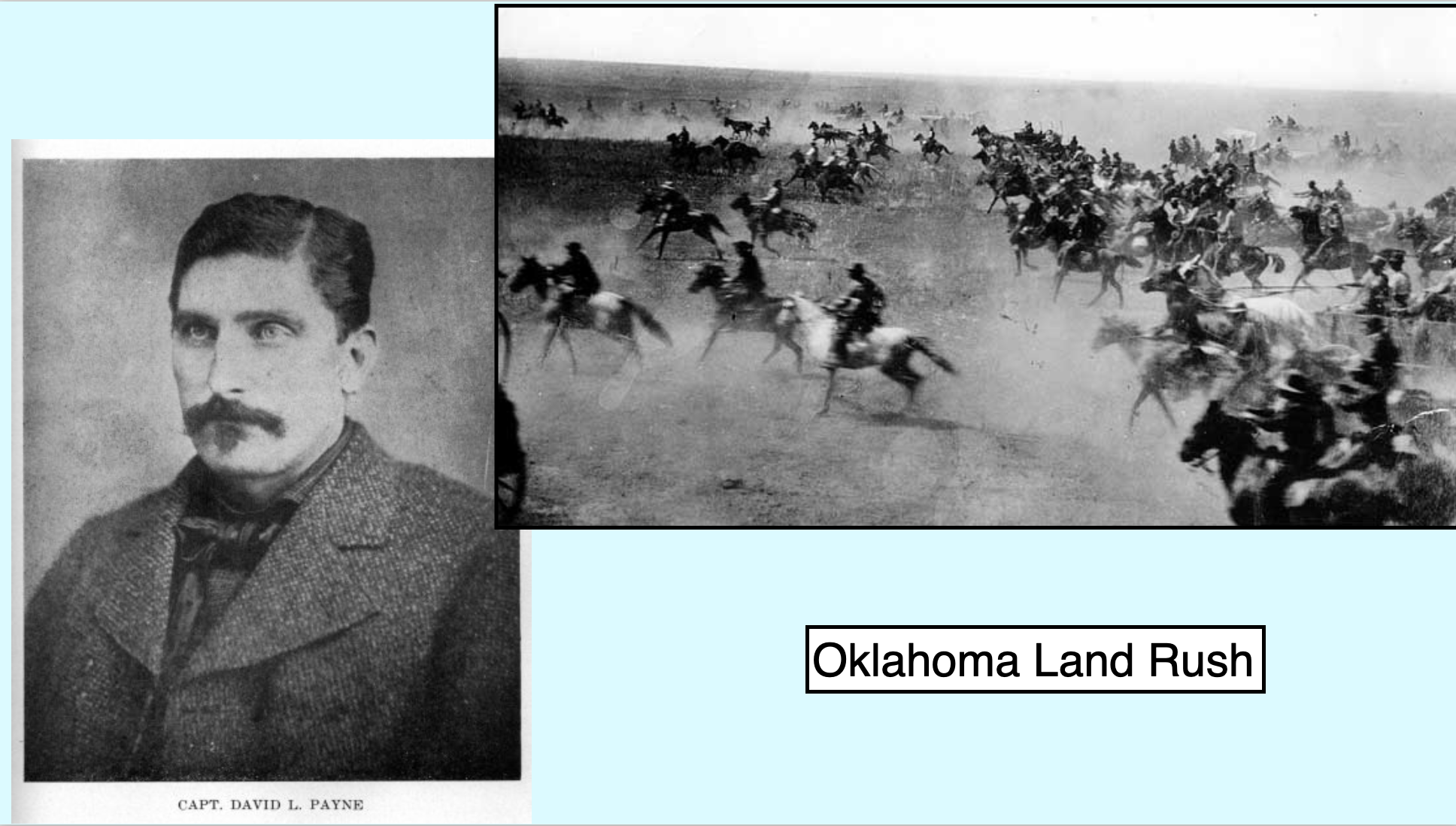
ON THIS DAY: 22 April 1889 – The Oklahoma Land Rush was one of the most dramatic land-distribution events in United States history. In a single day, tens of thousands of settlers raced to claim land in what had previously been designated as Native American territory.
After the American Civil War, the U.S. government increased pressure on Congress to open parts of Indian Territory (present-day Oklahoma) to white settlement. Activists such as frontiersman and soldier, David L. Payne, became the leading organiser of settlers known as ‘Boomers’ who claimed that central portions of Indian Territory were public lands open under the Homestead Act of 1862.
Eventually, the American President, Benjamin Harrison, signed a proclamation allowing settlement under the Homestead Act, which allowed individuals to claim up to 160 acres if they lived on and improved the land.
At high noon (CDT), bugles sounded and cavalry units lifted the barriers along the borders. An estimated 50,000 settlers rushed into the territory on horses, wagons, bicycles, and on foot. Participants raced across the prairie to stake their claims with posts and flags.
Some settlers illegally entered the land before noon to secure the best plots. These individuals became known as ‘Sooners’, a term that later inspired the nickname of the state and of the University of Oklahoma sports teams.
Although the land was called ‘unassigned’, it had previously been taken from Native tribes through federal policies and treaties. Earlier in the century, tribes such as the Cherokee had been forcibly moved to Indian Territory during events like the Trail of Tears, after the U.S. government promised that this land would remain theirs. When settlers were suddenly allowed to enter the territory in 1889, many Indigenous communities felt those promises had been broken. The land rush accelerated the loss of Indigenous control in the region, affecting nations including the Muscogee (Creek) Nation and the Seminole.
The long-term consequences were significant. Rapid settlement paved the way for the creation of Oklahoma Territory in 1890. Major towns formed almost instantly, including Oklahoma City and Guthrie, the latter growing from open prairie into a town of around 10,000 people in a single day. Additional land runs followed throughout the 1890s, and the region eventually became the state of Oklahoma in 1907.
Just a generation or two later, the severe droughts and dust storms of the 1930s Dust Bowl forced many Oklahoma families – often called ‘Okies’- to abandon the very land their parents and grandparents had once raced to claim. Loading their belongings into battered cars and trucks, some nicknamed ‘Sooner Schooners,’ thousands headed west along Route 66 in search of work and a new life in California.
In a twist of history, the same spirit of hope and desperation that had driven settlers into Oklahoma during the land rush of 1889 would, decades later, drive many of their descendants to leave it behind.