
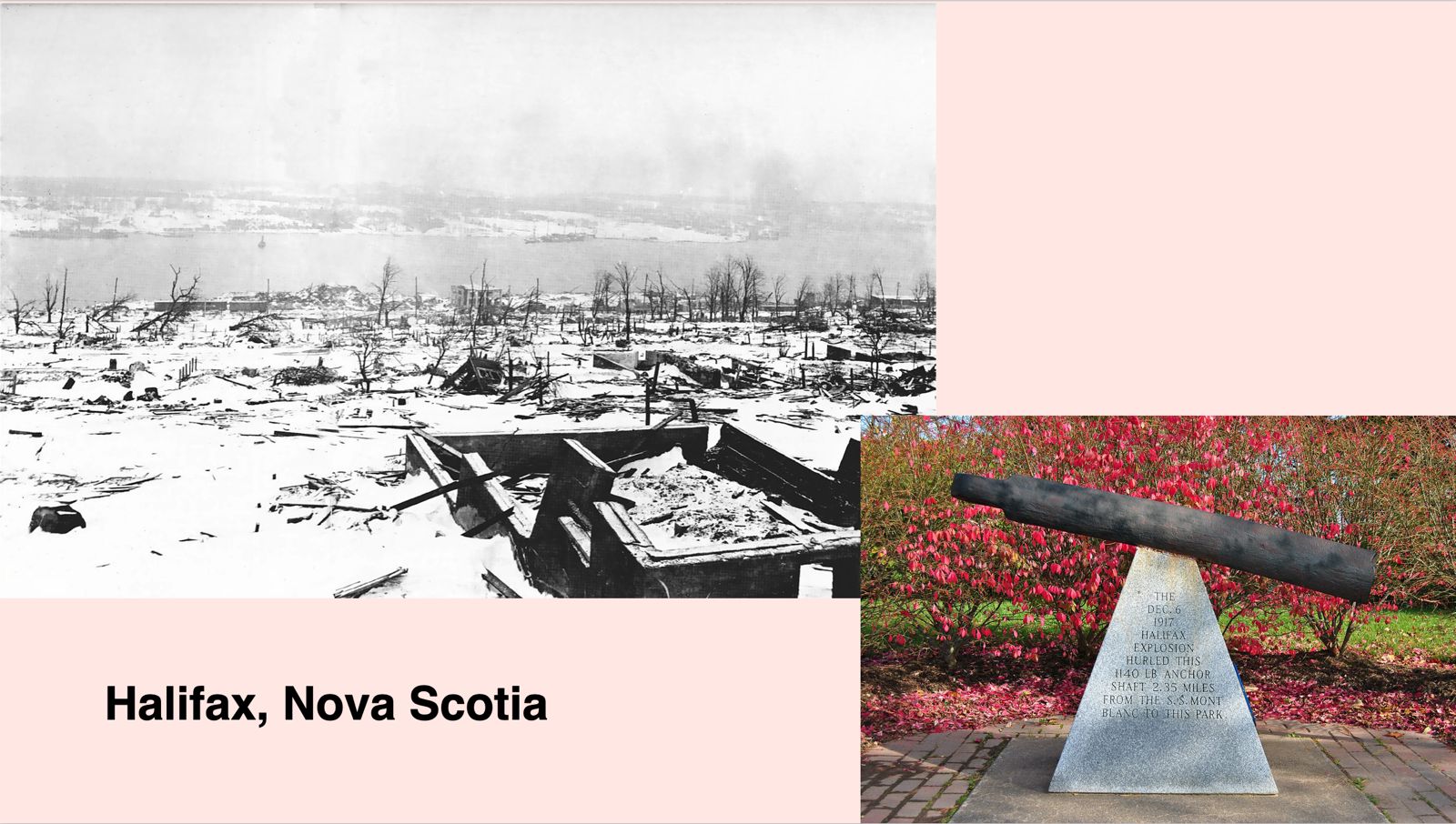
ON THIS DAY: 6 December 1917 – tragedy struck the city of Halifax, Nova Scotia. Two ships collided in the narrow stretch of water known as The Narrows, triggering one of the largest non-nuclear explosions in history. The blast killed 1,800 people, injured more than 9,000 – many blinded by shattered glass – and left 25,000 homeless.
The collision involved the SS Mont-Blanc, a French cargo ship loaded with volatile materials including TNT, picric acid, benzol, and guncotton, and the SS Imo, a Norwegian vessel en route to Belgium to collect war relief supplies. The Mont-Blanc was inbound to refuel before joining a wartime convoy and technically had the right of way, but confusion and miscommunication led to disaster. At approximately 8:45 a.m., the two ships struck each other.
Sparks from the impact ignited the benzol vapours on the Mont-Blanc’s deck. Realising the danger, the crew abandoned ship, shouting frantic warnings in French – words that few onshore could understand. The burning vessel drifted toward the Halifax waterfront, drawing hundreds of curious spectators to their windows and the shoreline.
At 9:04, the Mont-Blanc exploded. The north end of Halifax was obliterated. Entire neighbourhoods were levelled, fires erupted across the city, and a massive shockwave shattered windows up to 80 kilometres (50 miles) away. The nearby Mi’kmaq community of Turtle Grove and parts of Dartmouth were devastated by both the blast and the ensuing tsunami.
The force of the explosion was unimaginable – the Mont-Blanc’s anchor, weighing more than 500 kilograms (1,100 pounds), was hurled over 3 kilometres (1.8 miles).
The disaster struck in the midst of World War I, but help came swiftly. The city of Boston dispatched medical teams and emergency supplies within 24 hours – a remarkable act of compassion that forged a lasting bond between the two cities. To this day, Halifax sends a Christmas tree to Boston each year in gratitude.
As if fate had not dealt enough hardship, a blizzard hit the following day, hampering rescue efforts and deepening the suffering of survivors.
The Halifax Explosion forever changed the city and the world’s approach to emergency response, urban planning, and the transport of hazardous materials. It remains a defining chapter in Canadian history – a story of unimaginable tragedy, extraordinary courage, and enduring resilience.