
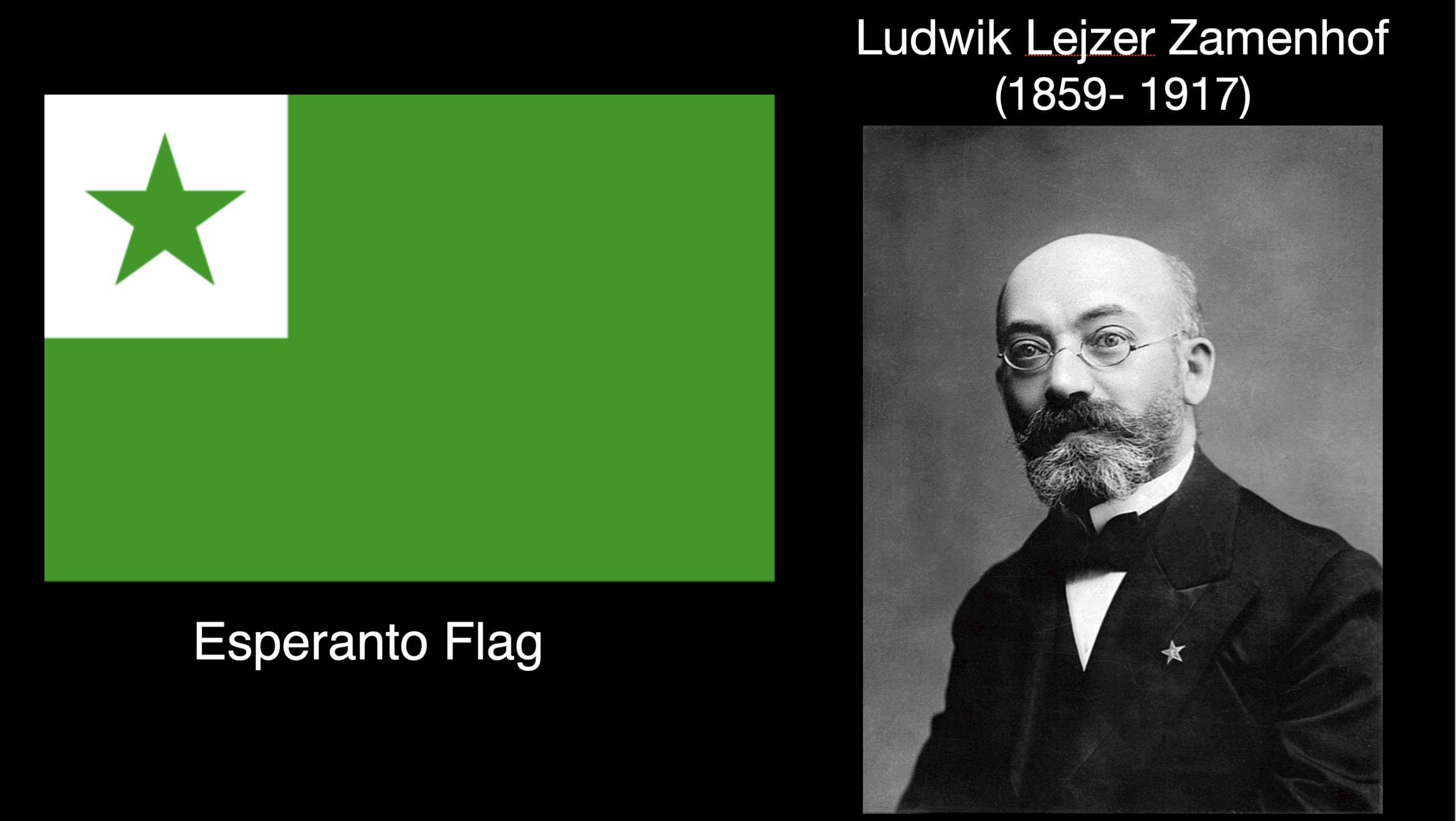
ON THIS DAY: 15 December 1859 – In Białystok, a Polish town then part of the Russian Empire, Ludwik Lejzer Zamenhof was born. He would become the inventor of the international language Esperanto.
Zamenhof was a Polish-Jewish ophthalmologist, linguist, and idealist who grew up speaking several languages – Yiddish, Russian, Polish, and German. Białystok was a multicultural city, home to Poles, Russians, Germans, Jews, and Lithuanians, but Zamenhof witnessed frequent ethnic and linguistic conflicts. It was these divisions that inspired him, even as a child, to dream of a neutral international language that could foster understanding and peace.
As a teenager, Zamenhof began designing his universal language, which he originally called Lingvo Internacia (‘International Language’). In 1887, under the pseudonym Dr. Esperanto (one who hopes), he published Unua Libro (First Book) in Warsaw, introducing the language to the public. The pseudonym Esperanto soon became the name of the language itself. Zamenhof saw Esperanto not only as a linguistic project but as part of a humanitarian and ethical vision, which he called Homaranismo (‘the philosophy of universal humanism’).
The first World Esperanto Congress took place in 1905 in Boulogne-sur-Mer, France. Zamenhof attended and delivered the opening address. The movement grew rapidly, with new societies, literature, and translations appearing worldwide.
Zamenhof died in 1917, before seeing how far his language would spread. Today, Esperanto is spoken by hundreds of thousands – possibly millions – across more than 100 countries. There are even native Esperanto speakers, as well as books, music, films, and modern tools like Wikipedia and Duolingo courses in the language.
Famous speakers and supporters of Esperanto include J. R. R. Tolkien, Leo Tolstoy, Umberto Eco, and Tivadar Soros, the father of financier George Soros. While Pope John Paul II did not speak Esperanto himself, he officially recognised the language and even included greetings in Esperanto during his Easter messages.
Zamenhof Day (in Esperanto: Zamenhofa Tago) is celebrated every year on December 15, Zamenhof’s birthday.
Today, Esperanto continues to symbolise hope, unity, and the power of human connection.