
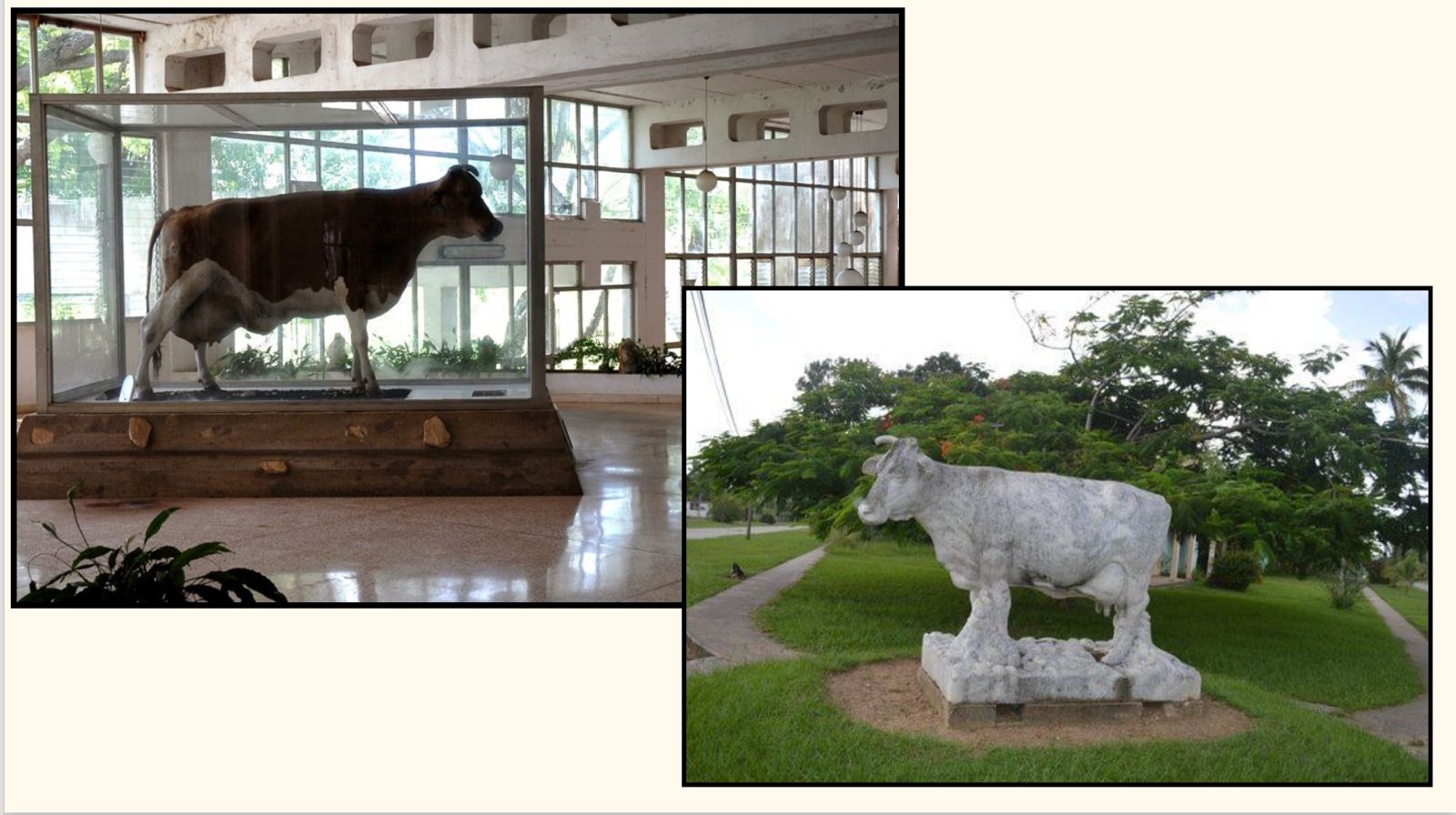
ON THIS DAY: 1 March 1985 – The world’s highest milk-yielding cow, Ubre Blanca (‘White Udder’), died in Cuba. In 1982, she set a world record for milk production, producing over 110 litres of milk in a single day (about 30 gallons) – far exceeding typical dairy cows, which usually produce around 25-40 litres per day.
Following the Cuban Revolution in 1959, the American embargo disrupted milk supplies, forcing Cuba to rely heavily on Soviet powdered milk. The country needed to solve food shortages, modernise agriculture, and improve nutrition – especially for children. Milk was considered essential.
Fidel Castro imported high-yield Holstein cattle from Canada and other northern countries to increase domestic milk production. However, these imported cows struggled with Cuba’s tropical climate, disease pressures, and pasture conditions.
Cuba’s solution was to invest heavily in selective breeding programmes, veterinary science, and biotechnology. Scientists crossbred high-yield foreign dairy cattle with hardy Zebu cattle, which tolerate heat and parasites far better. The result was a ‘super dairy cow’ suited to tropical conditions – and Ubre Blanca became the most famous example.
Her legacy encouraged further Cuban investment in artificial insemination programmes, genetic cattle improvement, and research into cloning and preserving elite livestock genetics.
Ubre Blanca also became a symbol of national pride. After her death, Cuba built a statue and memorial in her honour on the Isle of Youth (Isla de la Juventud), where she was raised. Her taxidermied remains are preserved at the National Cattle Heath Centre in Havana.