
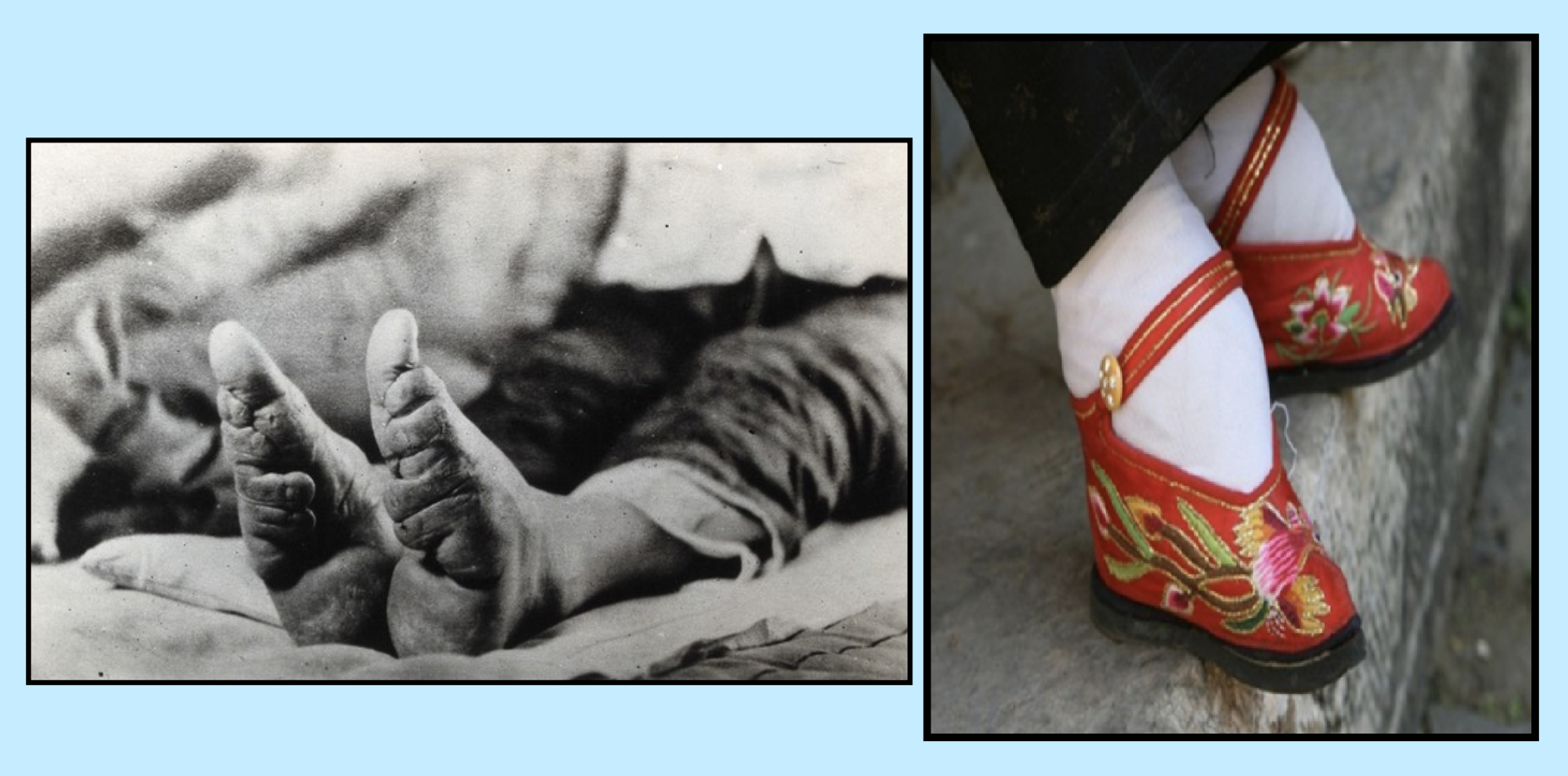
ON THIS DAY: 8 March 1912 – Foot binding, a Chinese cultural practice that lasted for nearly a thousand years, was officially banned by the newly formed Republic of China.
Foot binding involved tightly binding the feet of young girls to keep them extremely small. The tradition is believed to have begun during the Five Dynasties and Ten Kingdoms period (907–960 CE), possibly among elite court dancers. By the Song Dynasty (960–1279), it had spread among upper-class families and gradually became common across many levels of society.
Small feet, known as ‘lotus feet’, were seen as a symbol of beauty, refinement, and social status. The ideal size was about three inches (7–8 cm), referred to as ‘golden lotuses’. Bound feet were associated with femininity, discipline, and modesty, and many families believed daughters with small feet would have better marriage prospects. The practice also restricted mobility, reinforcing traditional gender roles.
The binding process usually began between the ages of four and nine. The arch of the foot was broken, the toes were folded underneath, and the feet were tightly wrapped and repeatedly rebound to maintain their shape. This caused lifelong pain, disability, infections, and sometimes death.
Opposition to foot binding grew during the 19th century, led by Chinese reformers and Christian missionaries. Following the fall of the Qing Dynasty in 1911, the Republic of China introduced modernisation reforms. On 8 March 1912, the government ordered parents to stop binding their daughters’ feet and encouraged women with bound feet to gradually unbind them.
Although the practice did not disappear immediately, particularly in rural areas, it steadily declined and had largely vanished in mainland China by the 1950s.
One of the last known survivors was Zhang Yunying, who was interviewed by photographer Jo Farrell in 2011 at the age of 90, helping preserve the memory of this historical practice.