
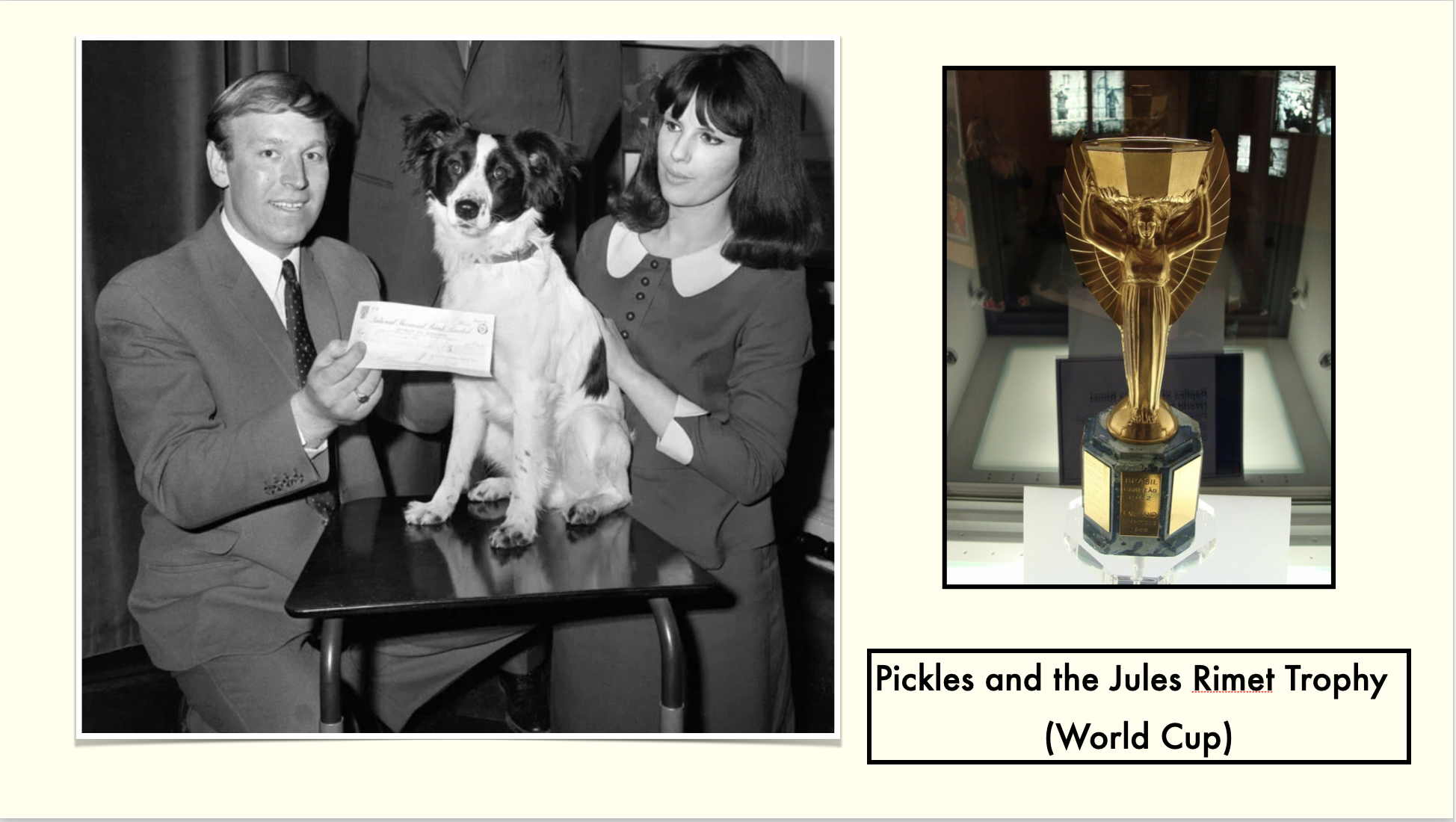
ON THIS DAY: 27 March 1966 – a four-year-old collie named Pickles made headlines around the world after discovering the stolen Jules Rimet Trophy, better known as the World Cup.
Just one week earlier, on 20 March, the trophy had been stolen while on public display at Methodist Central Hall in Westminster. Remarkably, the thieves ignored the far more valuable Stanley Gibbons Stampex exhibition nearby, which featured rare stamps worth £3 million.
The robbery took place during church service hours. Thieves broke into the building and removed the trophy from its display case, sparking national outrage and embarrassment just months before the World Cup tournament was due to begin in England.
Police launched a massive search operation. A man calling himself ‘Jackson’ contacted the chairman of the Football Association demanding a £15,000 ransom. During a sting operation, police arrested Edward Betchley, who claimed he was merely a middleman. He never revealed the identity of the true thief – and to this day, the case remains officially unsolved.
Then came the extraordinary twist. Pickles, born in 1962, was out for a walk with his owner, David Corbett, in the Beulah Hill area of South London. While sniffing around a parked car, Pickles discovered a parcel wrapped in newspaper hidden beneath a hedge. Curious, Corbett unwrapped the package – and inside was the missing World Cup trophy.
Overnight, Pickles became a national hero. He appeared in newspapers and on television, received a reward of around £6,000, and even attended a celebratory banquet after England won the World Cup that summer. He also starred in the 1966 film The Spy with a Cold Nose, alongside Eric Sykes and June Whitfield. In recognition of his remarkable discovery, Pickles was awarded a silver medal by the National Canine Defence League and appeared on the children’s television programme Blue Peter.
Sadly, Pickles’ fame was short-lived. In 1967, at just five years old, he died after accidentally choking while chasing a cat in his garden.
He was buried in his owner’s back garden, and today his collar is preserved and displayed at the National Football Museum, where the story of the dog who saved the World Cup lives on.