
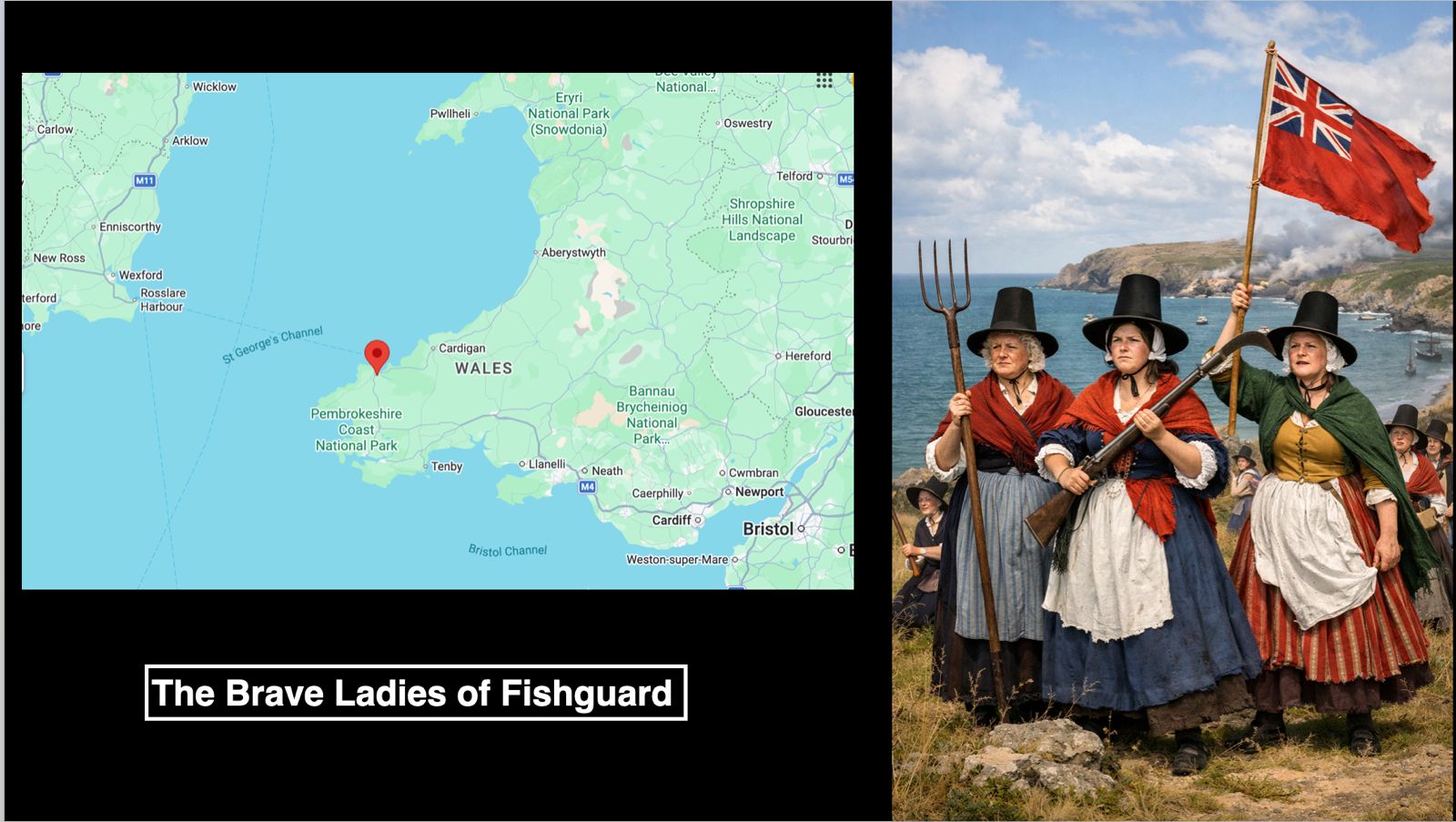
ON THIS DAY: 22 February 1797 – This date is remembered as the day a small Welsh town, Fishguard, became the site of the last invasion of Britain – and when a group of local women, later known as the Brave Ladies of Fishguard, helped secure a remarkable and bloodless victory.
France, fired by revolutionary zeal and locked in conflict with Britain, backed a plan to land troops in Wales and ignite a popular uprising. The expedition was led by Colonel William Tate, an Irish-American officer in French service. Around 1,400 men came ashore near Carregwastad Point, just west of Fishguard. Many of these troops were poorly disciplined, and some were even former convicts.
Almost immediately, the invasion began to unravel. Rather than receiving the welcome they had hoped for, the French met resistance and hostility from local people. Matters worsened when soldiers broke ranks to loot nearby farms and villages. Alcohol was found, discipline collapsed, and whatever organisation the force had quickly dissolved.
This is where the Brave Ladies of Fishguard enter the story. Local women traditionally wore tall black hats and red shawls as part of Welsh dress. Seen from a distance – particularly in poor light – they closely resembled British soldiers in red uniforms. As groups of these women moved across the surrounding hills, French troops became convinced that large numbers of British reinforcements were arriving.
The British commander, Lord Cawdor, actually had only around 500 men – far fewer than the French force – but he relied on confidence, positioning, and bluff. He deployed his troops strategically and demanded Colonel Tate’s unconditional surrender. Already demoralised, disorganised, and now believing themselves hopelessly outnumbered, the French agreed.
On 24 February 1797, Tate formally surrendered on Goodwick Sands. Not a single life was lost in battle, making it one of the most extraordinary defensive victories in British history.
The Brave Ladies of Fishguard became enduring symbols of courage, calm, and clever deception. Their presence and composure played a genuine psychological role in convincing the invaders that defeat was inevitable. Today, Fishguard proudly remembers this unique moment when ordinary local people – including women simply going about their daily lives – helped thwart an invasion linked to Napoleon’s wider ambitions in Europe.