
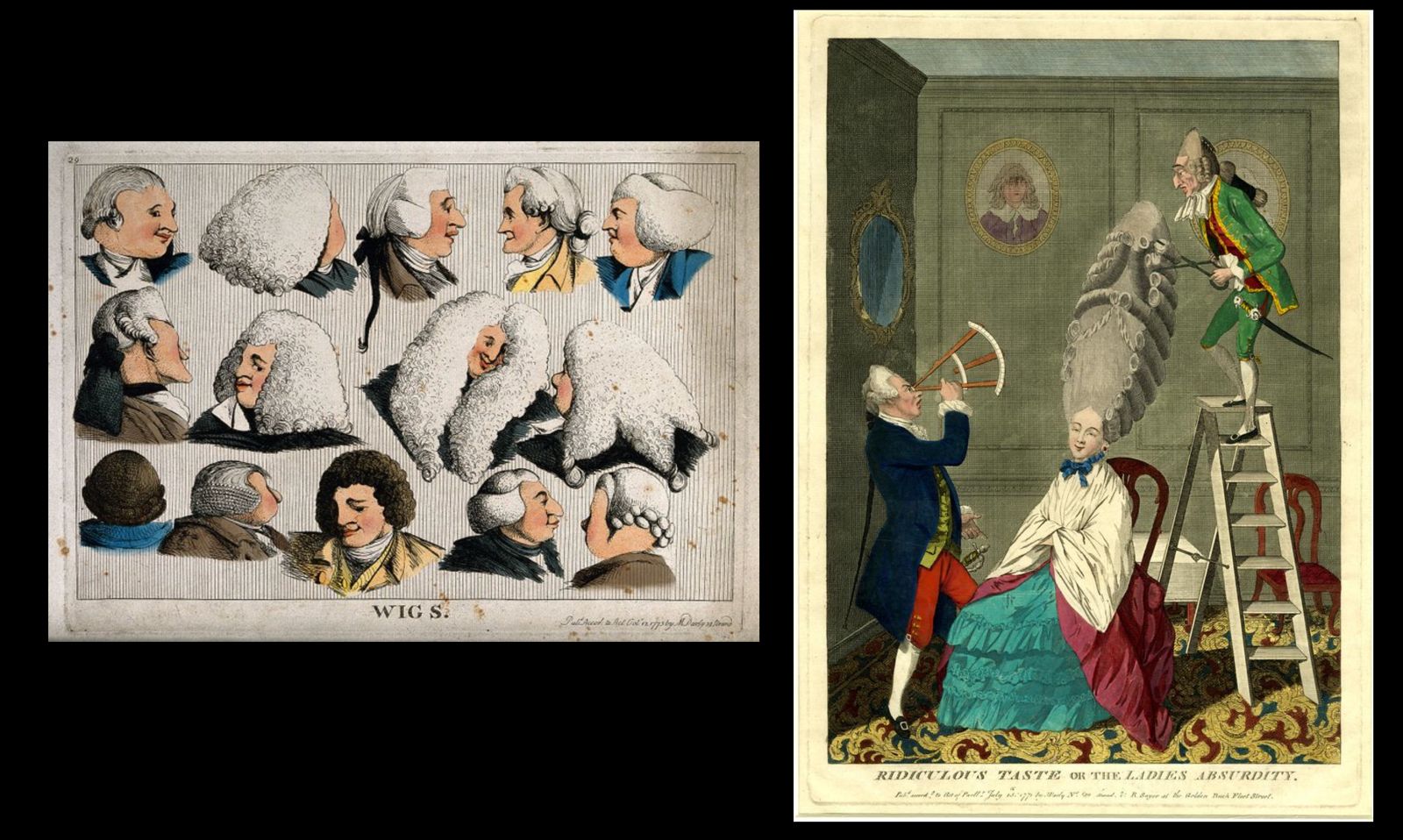
ON THIS DAY: 5 May 1795 – England introduced a tax on hair powder—an essential part of wig-wearing at the time. The fee was set at one guinea per year. Interestingly, the new law did not tax the powder itself; instead, it taxed the right to use hair powder.
Wigs had first become fashionable among European elites in the 1500s. Queen Elizabeth I famously wore elaborate wigs, but it was during the late 1600s that wigs became the social norm. Fashion leaders such as Louis XIV in France and Charles II in England helped popularise the trend. The period from the late 1600s to the mid-1700s is often called the ‘Age of Periwigs.’ Judges, lawyers, aristocrats, government officials, and even domestic staff commonly wore wigs.
But why powder wigs at all? The reasons were practical, hygienic, and social. Head lice were widespread, and regular bathing was uncommon. Many people shaved their natural hair and wore wigs instead. Powder helped absorb grease and sweat, and scented varieties masked unpleasant odours. Some powders even contained ingredients believed to discourage lice.
The tax itself was introduced by Prime Minister William Pitt the Younger to raise funds for Britain’s war efforts during the French Revolutionary Wars. In its first year alone, the tax raised an impressive £200,000.
Anyone wishing to wear powdered hair or wigs had to register their name at a stamp office, pay the annual fee of one guinea, and obtain a certificate—essentially a licence—allowing them to use hair powder. Lists of licensed users were publicly displayed in local parishes.
There were, however, exemptions. Members of the Royal Family and their servants, poorer clergy earning under £100 a year, and low-ranking soldiers and sailors were not required to pay. Even so, enforcement could be strict. In 1796, the Reverend Francis Barstow of Aslackby was fined £20 for wearing powdered hair without a licence.
The tax was not repealed until 1861. By then, wigs had long since fallen out of fashion – ironically, in part because of the tax itself. It had also become difficult to collect, and by the 1850s fewer than 1,000 people were still paying for the licence.