
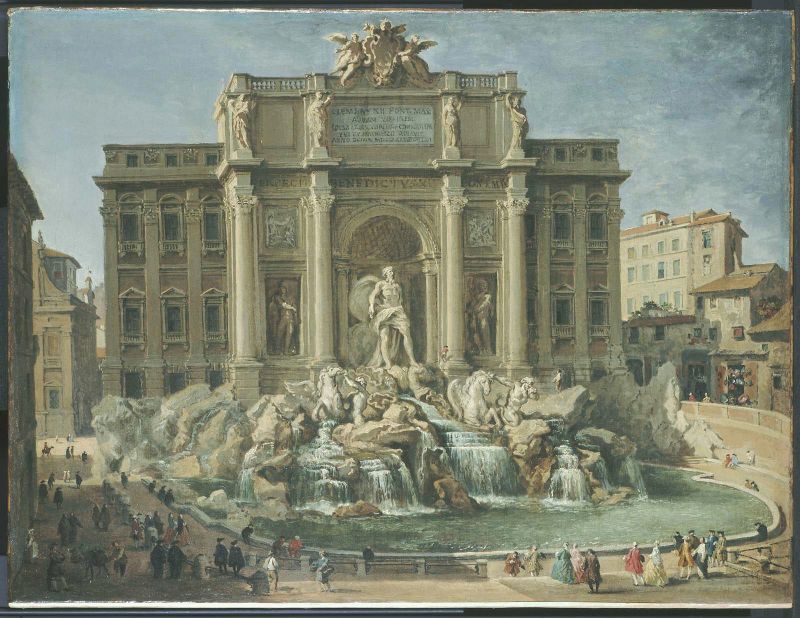
ON THIS DAY: 22 May 1762 – The magnificent Trevi Fountain in Rome was officially inaugurated, marking the completion of what would become one of the most famous fountains in the world.
The ambitious project took 30 years to complete. Construction was finished under architect Giuseppe Pannini, but the fountain itself was originally designed by Nicola Salvi, who won a papal design competition in 1732. Sadly, Salvi died in 1751, eleven years before his masterpiece was completed.
The inauguration took place during the papacy of Pope Clement XIII, yet the fountain’s story began nearly 1,800 years earlier.
In 19 BC, the Roman general Marcus Vipsanius Agrippa commissioned the Aqua Virgo aqueduct. According to legend, a young girl (virgo) guided Roman soldiers to a pure spring – giving the aqueduct its name. This ancient water source supplied Rome’s baths and fountains and still feeds the Trevi Fountain to this day.
The Trevi Fountain is far more than decoration. At its centre stands Oceanus (often mistaken for Neptune), riding a shell-shaped chariot drawn by seahorses. The horses represent the contrasting moods of the sea – calm and turbulent—while Tritons, mythological sea beings, guide them, symbolising humanity’s effort to tame the forces of nature.
The name ‘Trevi’ derives from tre vie, meaning ‘three roads,’ as the fountain stands at the junction where three streets meet.
The fountain achieved worldwide fame in 1960, when Anita Ekberg famously stepped into its waters in the film La Dolce Vita, creating one of cinema’s most iconic scenes.
Today, the Trevi Fountain attracts millions of visitors every year. Since February 2026, a €2 fee has been charged to tourists and non-residents to pass through crowd barriers into the lower basin area – the spot where visitors traditionally toss coins to ensure their return to Rome.