
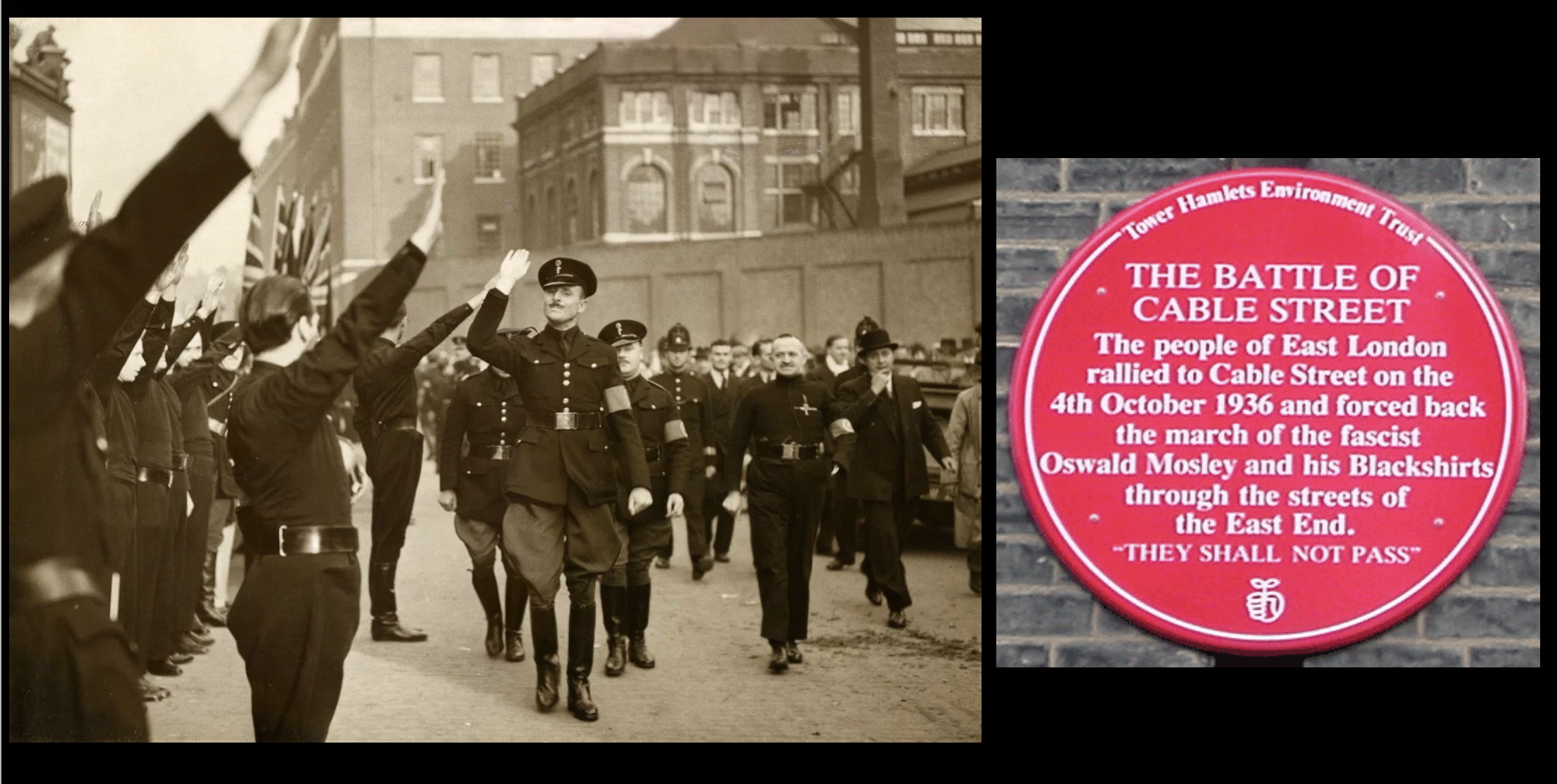
ON THIS DAY: 16 November 1934 – Sir Oswald Mosley and three of his Blackshirt followers were committed to stand trial on charges of riotous assembly and assault.
Sir Oswald Mosley (1896–1980) was the leader of the British Union of Fascists (BUF), founded in 1932 with the aim of establishing a fascist system of government in Britain. Inspired by Benito Mussolini’s regime in Italy, Mosley’s uniformed followers, known as the Blackshirts, became a familiar and controversial sight on British streets during the 1930s.
The Blackshirts acted as stewards at meetings, maintained party discipline and sometimes clashed violently with political opponents. Their distinctive black uniforms, flags, marching formations and mass rallies were designed to project an image of strength, order and national revival, but their activities increasingly alarmed the public.
The charges against Mosley arose from a disturbance following a BUF meeting in Worthing, Sussex, on 9 October 1934, when fascists associated with the movement were accused of assaulting members of the public. During a preliminary hearing between 12 and 16 November, around 30 witnesses reportedly gave evidence. Mosley and three associates were committed for trial, pleaded not guilty and were released on bail.
The trial opened at Lewes Assizes on 18 December 1934. Mosley’s co-defendants were William Joyce, Captain Charles H. B. Budd and Bernard Mullans. Represented by the prominent barrister Sir Patrick Hastings, all four defendants were acquitted on 19 December after the judge concluded that the prosecution had failed to establish a case against them.
Despite attracting an estimated 40,000 followers at its peak, the BUF failed to win seats in national or local elections. Its reputation suffered further following the violence at a major rally at Olympia in 1934 and the Battle of Cable Street in October 1936, when thousands of anti-fascist demonstrators opposed Mosley’s planned march through London’s East End. The Public Order Act of 1936 subsequently prohibited the wearing of political uniforms in public and gave police greater powers to regulate marches.
Following the outbreak of the Second World War, the government grew increasingly concerned about the activities of British fascists. In May 1940, the BUF was banned and Mosley, along with his wife Diana and other fascist activists, was interned under wartime security regulations. Mosley was released in November 1943 on health grounds and placed under house arrest for the remainder of the war. The BUF never recovered and was dissolved, marking the end of its principal role in British political life.