
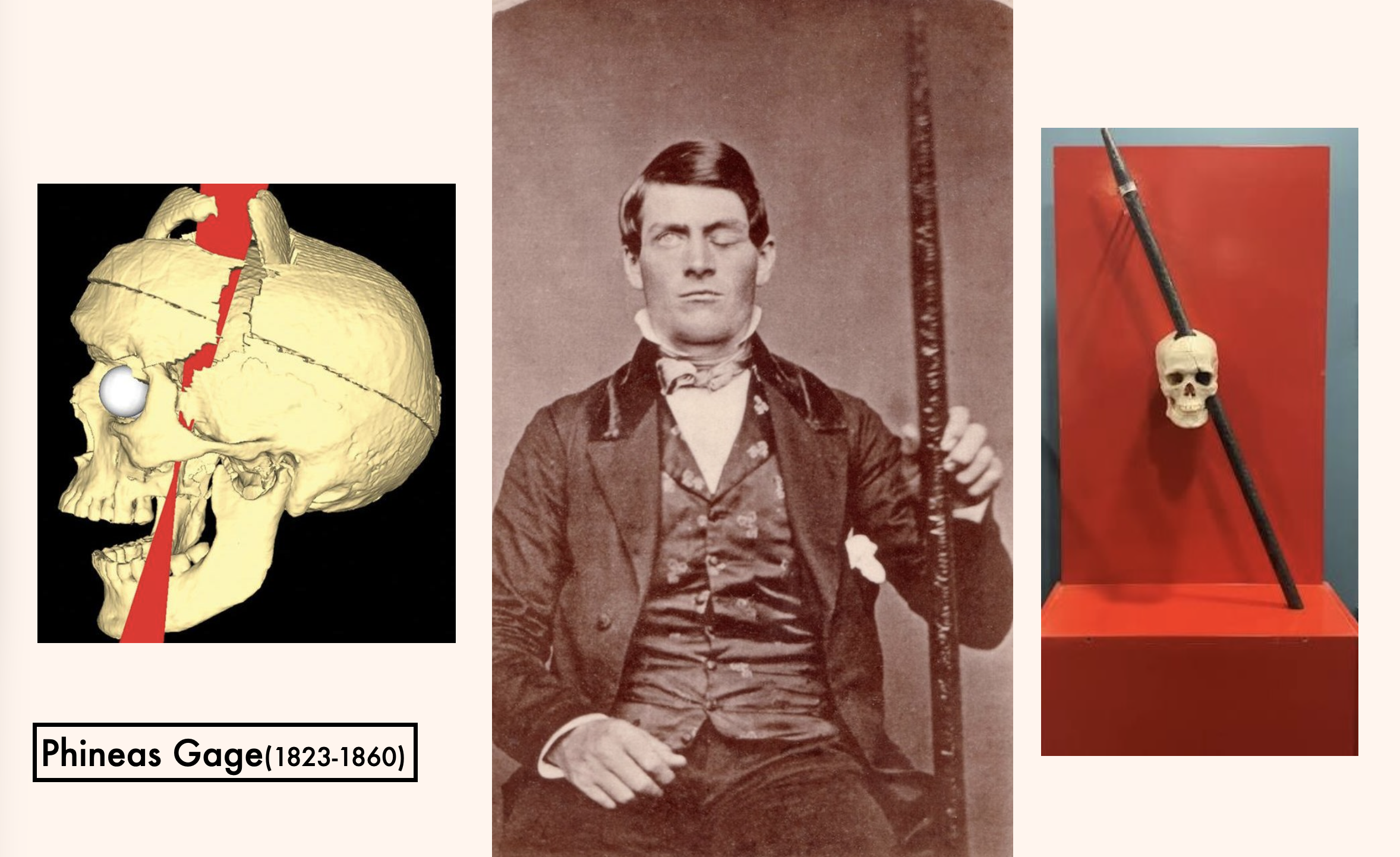
ON THIS DAY: 13 September 1848 – Phineas Gage survived a large iron rod blasted through his head.
Phineas Gage was supervising the construction of the Rutland & Burlington Railroad near Cavendish, Vermont, where his crew was blasting rock to prepare the railway bed.
The process involved drilling a hole into the rock, filling it with gunpowder, adding a fuse, and then packing sand or clay over the powder using a heavy iron tamping rod. That afternoon, Gage began tamping before enough sand had been added. The iron rod struck the rock, creating a spark that ignited the gunpowder. The explosion propelled the tamping iron upwards like a giant spear. The rod was 3 feet 7 inches (1.1 metres) long, approximately 1¼ inches (3.2 cm) in diameter, and weighed around 13¼ pounds (6 kg).
Against all odds, Gage did not die instantly. He was thrown onto his back but, within minutes, was talking. He climbed into an ox cart and sat upright during the journey to his lodgings. He even spoke to the doctor who came to treat him. His physician, John Martyn Harlow, later recorded that Gage was fully conscious and able to describe what had happened.
Although Gage developed a severe brain infection and came close to death, Harlow successfully treated him. Within weeks, his wounds began to heal, he regained the ability to walk, and he recovered much of his physical strength. He did, however, lose the sight in his left eye.
But it was not simply his physical survival that made Gage famous. According to contemporary accounts, his personality changed dramatically. A man previously regarded as responsible, hard-working, reliable and even-tempered was now described as impulsive, irritable and impatient, with difficulty planning ahead.
Gage continued to work in New Hampshire before moving to Chile, where he drove stagecoaches across difficult mountain routes. This was a demanding occupation requiring judgement, concentration and skill, suggesting that he had made a remarkable degree of recovery.
After suffering a series of epileptic seizures, Phineas Gage died in 1860, twelve years after the accident, at the age of just 36. After his death, his family allowed his body to be exhumed. His skull and the famous tamping iron were preserved and are now housed at the Warren Anatomical Museum in Boston, where they remain among the most remarkable artefacts in the history of medicine.
Gage’s extraordinary survival provided some of the earliest compelling evidence that damage to particular areas of the brain could affect personality and behaviour. His accident helped to transform our understanding of the relationship between the brain, personality and human behaviour.